
November 4, 2026 · 7 min read
Vendor Application Management for Market Organizers
How market organizers can connect vendor applications to booth fees, insurance and waivers, so every approved vendor is ready before setup day.
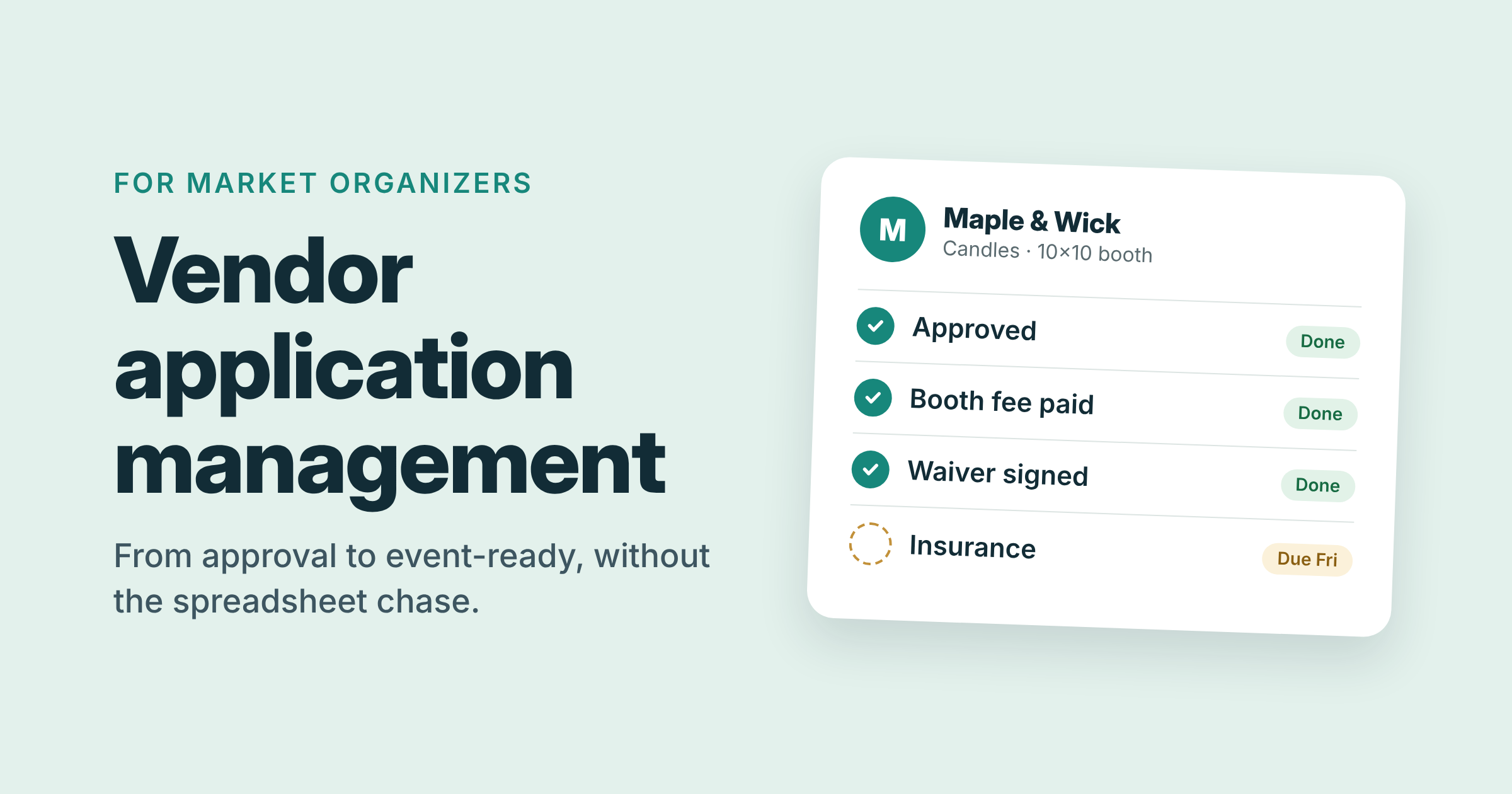
A market can look fully booked on a spreadsheet and still be unprepared to open. A vendor may have been approved but not paid. Another may have paid but never submitted an insurance certificate. A third may have signed up through email, leaving no clear record of the waiver they agreed to.
Vendor application management is the work of turning those scattered commitments into a complete, usable vendor record before event day. For craft fair, artisan market, and pop-up organizers, that means managing more than applications. It means connecting approval decisions to booth fees, required documents, signed agreements, and reliable vendor communication.
When that work is handled in separate inboxes, spreadsheets, payment apps, and folders, every deadline creates another round of follow-up. A structured process gives organizers a clearer answer to the question that matters most before setup begins: Is every confirmed vendor actually ready to participate?
This guide focuses on the application and approval side. For the booth side, see our guide to booth rental management.
What Vendor Application Management Should Cover
A vendor application is the starting point, not the whole process. Organizers need enough information to review whether a business fits the market, assign an appropriate space, collect payment, and confirm that event requirements have been met.
For a typical maker market or craft fair, the application should capture the vendor's business name, contact details, product category, product photos or descriptions, social media or website information if relevant, and any setup needs. Depending on the event, organizers may also need information about tent size, power needs, food permits, sales tax documentation, or accessibility considerations.
After review, the application needs a clear status. Is the vendor pending, approved, waitlisted, declined, or withdrawn? Without defined statuses, organizers often end up searching email threads to determine whether an applicant was accepted or simply never received a response.
Approval should trigger the next required actions. These commonly include paying a booth fee, providing a certificate of insurance, and signing a waiver or vendor agreement. Keeping each item tied to the same vendor record prevents a common problem: having proof that a vendor paid, but no easy way to confirm whether their other requirements are complete.
Why Fragmented Vendor Workflows Create Risk
Many event teams begin with tools that work well for a small number of vendors. A form collects applications, a spreadsheet tracks decisions, a payment app accepts booth fees, and email handles reminders. The issue is not that any one tool is unusable. The issue is that the organizer becomes the connection between all of them.
That creates avoidable gaps. A payment may arrive under a personal name rather than a business name. An insurance certificate may be attached to an old email thread. A vendor may submit a new application after being waitlisted, creating duplicate records. As the event gets closer, staff and volunteers can no longer tell which version of the spreadsheet is current.
The operational risk is larger than a messy inbox. If a vendor arrives without a required waiver, the organizer must decide whether to delay setup, make an exception, or gather paperwork under pressure. If an uninsured vendor has been assigned a booth, the issue may not surface until the day before the market. If booth payments are not connected to approval records, revenue tracking becomes a manual reconciliation project.
A centralized process does not remove every exception. It does make exceptions visible early enough to handle them calmly.
Build the Application Around Real Approval Decisions
The strongest applications are not the longest ones. They ask for information that helps an organizer make a decision and prepare the event.
Start with the vendor's identity and offering. Ask how the business should be listed publicly, who the primary contact is, what products they plan to sell, and whether the goods are handmade, vintage, packaged food, or another category relevant to the market. If juried selection matters, request photos and descriptions in a consistent format so applications can be reviewed fairly.
Then collect operational details. Booth size, tent dimensions, vehicle access, electrical needs, and special setup requests may seem secondary during the application review. They become urgent when a site map is being finalized. Capturing them upfront lets organizers spot conflicts before space assignments are issued.
Finally, separate required fields from useful-but-optional information. Requiring every applicant to provide extensive marketing copy or multiple social profiles may discourage good vendors without improving decisions. Requirements should reflect the event's actual standards, not create paperwork for its own sake.
Use Clear Acceptance Criteria
Vendors should understand what the organizer is evaluating. Product fit, category balance, quality standards, local-business preference, prior event performance, and available space can all be valid considerations. Not every event needs a formal jury process, but every event benefits from consistent decisions.
Clarity also protects vendor relationships. A waitlist is easier to accept when applicants know that selection depends on space and category needs, not simply who emailed first. A straightforward application process makes the market feel organized before a vendor has even been approved.
Connect Approval to Payments and Documents
Once a vendor is accepted, the organizer's job shifts from selection to readiness. This is where vendor application management either creates order or becomes a chain of reminders.
Each approved vendor should have a visible checklist of what is still needed. At minimum, that may include booth payment, a signed waiver or vendor agreement, and an insurance certificate when the venue or event policy requires it. Food vendors may have additional permits. Indoor events may have different insurance expectations than outdoor markets. The right checklist depends on the event, but the organizer should not have to rebuild it vendor by vendor.
Payment tracking deserves particular attention. Record the booth fee due, amount paid, payment date, and any balance or refund status. If early-bird pricing, add-ons, or deposits are offered, those terms should be documented alongside the vendor record. A payment confirmation alone is not enough when staff need to answer whether a particular vendor still owes $50 or has paid in full.
Insurance collection should be equally specific. A file labeled "COI" is not useful if no one can tell which vendor submitted it, whether it is current, or whether it meets venue requirements. Organizers should be able to identify missing certificates quickly and send targeted reminders before the deadline.
A system such as BoothHub brings applications, payment records, insurance certificates, and signed waivers into one organizer-controlled workflow. The practical benefit is simple: readiness is visible without opening five different tools.
Set Deadlines That Support the Event Schedule
Deadlines work best when they are tied to an operational decision. The application deadline should leave enough time to review submissions and fill open categories. The payment deadline should happen before the organizer makes final commitments based on vendor count. Insurance and waiver deadlines should allow time to resolve missing or incorrect documents before load-in.
Avoid setting every requirement for the same date unless there is a clear reason. Vendors often need time after acceptance to arrange payment or request an insurance certificate from their agent. A staged schedule creates a more manageable flow: apply, receive a decision, complete payment, submit documents, then receive final setup details.
Automated reminders can reduce routine chasing, but timing matters. A reminder sent the day before a deadline may be too late for an insurance document. A reminder sent too often can be ignored. Use reminders to prompt action at sensible intervals, then reserve personal follow-up for high-priority exceptions.
Give Your Team One Source of Truth
Vendor data is often needed by more than the person reviewing applications. A market manager may need booth assignments. A finance person may need payment status. A venue contact may request proof of insurance. Event-day staff may need a vendor contact number or a copy of a signed agreement.
If each person keeps their own notes, discrepancies are almost guaranteed. A single vendor record should show the current status, not a collection of disconnected updates. This does not mean every team member needs access to every detail. It means the information they do need is current, organized, and easy to locate.
Before the event, review the roster with readiness in mind. Look for approved vendors with unpaid balances, missing documents, incomplete applications, or unresolved setup needs. Check for duplicates and confirm that waitlisted or declined applicants have not accidentally received event-day instructions. This review is much faster when the underlying process has kept records connected from the beginning.
Make Exceptions Deliberate, Not Accidental
Markets are built on relationships, and organizers will sometimes grant an extension, accept an alternative document, or hold a space for a returning vendor. Those decisions can be reasonable. Problems arise when exceptions are made informally and never recorded.
When an exception is approved, note what was decided, who approved it, and what remains outstanding. For example, a vendor may be allowed to pay a deposit now and the balance by a specific date. Another may be permitted to submit updated insurance after their policy renews. Documenting the arrangement prevents confusion when another team member reviews the record later.
A clear process does not make a market rigid. It gives organizers room to be flexible without losing control of the details.
The goal is not to create more administration for vendors or staff. It is to reach event day with fewer unknowns: the right vendors approved, booth fees accounted for, insurance certificates on file, waivers signed, and every remaining issue identified before vendors begin unloading.