
November 13, 2026 · 4 min read
9 Types of Markets BoothHub Works For
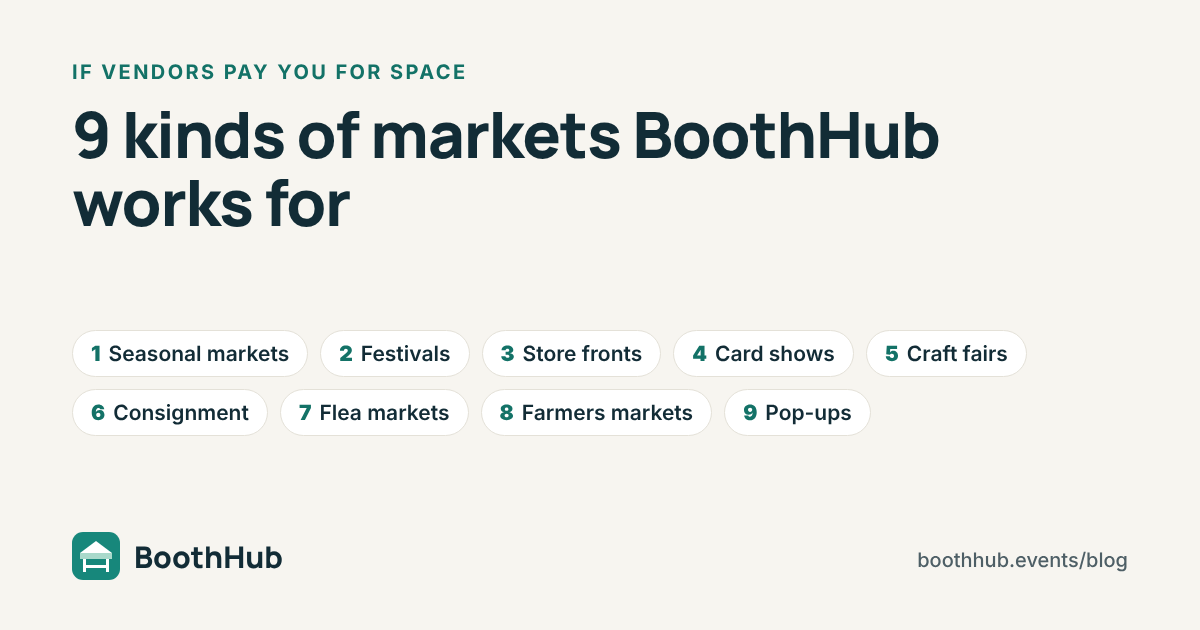
BoothHub works for seasonal markets, festivals, store front rentals, card shows, craft fairs, consignment shops, flea markets, farmers markets and pop-ups. See how each one runs.
If you collect booth fees, table fees or shelf rent from vendors, BoothHub was built for you. Most people picture one kind of event when they hear "vendor management," but the same problems show up everywhere vendors pay for space: applications in your inbox, payments in three different apps, and a spreadsheet nobody trusts by the week of the event.
Here are the market types BoothHub works for, ordered roughly by how much booth revenue each one can bring an organizer. The order comes down to three things: how many spaces you rent, how often you rent them, and whether you have more than one way to earn (booth fees plus tickets, or rent plus monthly billing).
1. Multi-week and seasonal markets
A market that runs every weekend for a season rents the same spaces over and over. Twenty-two booths across eight dates is 176 booth bookings, not 22. That is why these markets sit at the top of the list, and also why they are the hardest to run on spreadsheets.
On BoothHub, vendors pick the dates they want when they apply. You see how full each date is, approve each vendor's dates, and can offer a season discount to vendors who book every date. Vendors can request date changes, and you approve or decline them in one place. If you allow it, vendors can mark time off, so you know who is missing before the morning of.
2. Festivals and large one-day events
A big festival can rent dozens or hundreds of spaces in one day, often in several sizes and prices. Revenue per event is high, and so is the work: reviewing applications, balancing categories, collecting payment and sending arrival details to everyone.
BoothHub lets you set multiple booth sizes with their own prices and limits, require insurance, a signed waiver or a W-9, and put full events on a waitlist automatically. A week before the event, every accepted vendor gets your Day of Details packet: load-in windows, parking, setup rules and the day-of contact.
3. Store front booth rentals
Shops that rent booth space to makers and resellers earn the same rent every month, which makes this some of the steadiest income on the list. The pain is billing: who has paid for which month, who paid in cash, and who is moving out.
BoothHub bills store front vendors month by month. You can send a bill for a month, mark a month paid off-site when someone pays in person, adjust a vendor's rate, and add or remove months as vendors come and go. Vendors who paid in full show as paid for every month.
4. Card shows and collector shows
Card shows earn twice: dealers pay for tables, and collectors pay to get in. That second stream makes a well-run card show more valuable than its table count suggests.
BoothHub handles both sides. Dealers apply for tables and pay through the platform, and on Host Pro you can sell admission tickets and check people in at the door from the same event page.
5. Craft fairs and holiday bazaars
The classic one- or two-day craft fair, often run by a school, church or community group. Booth fees are modest, but a holiday fair with a full room adds up, and demand from makers is strong from October through December.
Makers apply with a BoothHub profile that already has their photos, categories and links, so you review the work, not a pile of attachments. You can invite vendors in a specific category, accept the ones you want, and let BoothHub collect booth fees and send payment reminders.
6. Consignment shops
Consignment and shelf rental bring in monthly rent from many small sellers, each with their own start date and needs. The revenue per vendor is smaller than a booth, but a full set of shelves is reliable income.
BoothHub tracks each consignor's months, sends monthly bills, and keeps finished vendors out of the way so your active list stays short. Vendors can sign your consignment agreement online, and the signed copy is stored with their records.
7. Flea markets and vintage markets
Flea markets run on volume: many tables at a lower fee, often every week. Vendors come and go, so the work is mostly about knowing who is booked for which date.
Set your market dates once, let vendors book the dates they want, and see a per-date count of who is coming. Repeat vendors reapply in a couple of clicks because their profile is already filled in.
8. Farmers markets
Farmers markets usually charge per day or per season, with a long season and a steady core of growers. Revenue per date is modest, but the season is long.
Season booking, per-date sign-ups, insurance and permit tracking, and weekly updates to every vendor all live in one place, so the market manager is not chasing paperwork by email in July.
9. Pop-ups, vendor nights and fundraisers
Brewery vendor nights, night markets, school fundraisers and nonprofit craft fairs are smaller, but there are a lot of them, and they are often run by volunteers with no time to build a system.
A free BoothHub listing gives them an application form, payments and a vendor list in an afternoon. Hosting is free, with no cap on listings. For a fundraiser, every booth fee collected on time goes straight to the cause.
Food and drink vendors fit in too
Many of these markets mix makers with food trucks, coffee carts and drink counters. You can set up a separate booth option for food and drink, with its own price, size and number of spots, right next to your regular booths.
One platform, whatever you run
Whether you rent 176 booth dates a season or six shelves in a corner of your shop, the job is the same: get the right vendors in, get paid, and get everyone ready for the day. BoothHub puts applications, payments, paperwork and vendor communication in one place, so you spend less time chasing and more time running a great market.
Post your first market on BoothHub, free to start.